From ChatGPT to an AI Operating System: Why Your AI Tools Aren't Producing Value
Most businesses pay for AI tools and still see no real value. The missing piece is an AI operating system: second brain, context and agents working together.
- ai-operating-system
- second-brain
- ai-agents
- business-automation
- ai-strategy
Most business owners are now paying for several AI subscriptions and still cannot name a single process that runs better because of them. The tools are not the problem. The problem is that a chat window has no memory of your business, so nothing you do in it accumulates.
That is the gap between using AI and operating with AI, and it is worth being precise about, because the fix is structural rather than a better prompt.
The difference between using AI and operating with AI
When you use AI, every conversation starts from zero. You paste the same background, re-explain how your company works, correct the tone, and end up with something you rewrite anyway. Do that fifty times and you have fifty conversations, not an asset. Prompts do not accumulate. Systems do.
When you operate with AI, the knowledge is already there. The rules are already written down. The work happens without you assembling the context by hand each time. The difference shows up not in the quality of a single answer, but in whether the second answer is cheaper to get than the first.
Ask ChatGPT who your biggest client is and it cannot tell you. Not because the model is weak, but because nobody ever gave it your business. That is a systems problem, and it has a systems answer.
Your company knowledge is the actual bottleneck
Look at where your company's knowledge actually lives right now:
- The reasoning behind your pricing is in a conversation with your salesperson.
- The client history is in your email.
- The numbers are in a spreadsheet on someone's laptop.
- The important part, how you decide, is in your head.
As long as it stays that way, every proposal, every reply and every report has to pass through you. You are not the owner of the process. You are the integration layer. That is why hiring more people or buying another tool rarely fixes it: the constraint is that context only exists in one place, and that place is you.
An AI operating system, or AIOS, is what you build to move that context out of your head and into something that can act on it. It is the architecture Egils Boitmanis and I developed together, as co-creators of the method, and have since implemented with businesses in five countries.
The three layers of an AIOS
An AIOS is not a product you buy. It is an architecture, and it works in three layers that have to be built in this order.
1. The second brain: your knowledge in one readable place
The first layer is everything your business knows, captured and organized where AI can actually read it: processes, offers, pricing logic, client history, past proposals, decisions and why you made them.
This is the unglamorous layer, and it is the one everybody wants to skip. Skip it and you get an assistant that writes confidently about a company it has never met.
2. The context: your rules, in writing
The second layer is how you work: your tone of voice, your standards, what you never promise, when something has to come to you before it goes out. Not a personality description, but operating rules a machine can follow.
This is the layer that turns generic output into something recognizably yours. In practice, it looks like a short set of house rules: direct tone, no jargon, always three options in a proposal, never commit to a deadline without checking, any discount above ten percent comes to me first.
3. The agents: the work that runs itself
Only on top of those two layers do agents make sense. This is the layer people imagine when they hear "AI": proposals drafted, follow-ups sent, reports assembled, campaigns prepared, questions answered from your own data.
Agents are the visible part, which is why so many projects start there and stall. An agent without context produces generic work. An agent without a second brain has nothing true to reason over. Built in order, the same agent becomes useful precisely because the two boring layers underneath it are done.
What actually changes
When the three layers are in place, the system works while you do not: overnight, over the weekend, and while you are with a client. Work that used to wait for a free hour in your calendar stops waiting for you.
Two honest caveats, because this gets oversold.
First, this is not a replacement for your judgment or your team. Brand-critical and high-risk decisions stay with people. What the system removes is the coordination drag around those decisions: the assembling, the reformatting, the retyping of things you have already decided once.
Second, it is not a weekend project you finish and forget. A second brain that nobody feeds goes stale, in exactly the way a CRM nobody updates goes stale. The system needs a cadence, and the cadence is part of the design.
How to start this week
You do not need a platform or a budget to test the idea. You need one process.
- Do a brain dump. One document. Everything you know about how your business runs that currently exists only in your head. Ugly and unstructured is fine. Volume beats formatting.
- Pick one recurring output. The proposal, the weekly report, the first reply to an inbound lead. One thing you produce often and that always sounds the same when you do it well.
- Write the rules for that one thing. Five to ten lines: tone, structure, what to never say, when to escalate to you. This is your context layer in miniature.
- Run it end to end, twice. Once with your notes and rules provided, once without. The gap between the two outputs is the value of the system, and seeing it is what makes the rest of the work obvious.
- Then automate, not before. Only once the output is right by hand should you connect it to your email, your calendar or your CRM.
The order matters more than the tooling. Knowledge, then rules, then automation. Automation without a scope is just faster chaos.
Frequently asked questions
What is an AI operating system?
An AI operating system, or AIOS, is a system that lets AI operate your business rather than answer isolated questions. It has three layers: a second brain holding your company's knowledge in a place AI can read, a context layer holding your rules and tone, and agents that carry out recurring work on top of both.
How is an AIOS different from ChatGPT or Copilot?
ChatGPT and Copilot are tools that sit inside an AIOS; they are not the system itself. On their own, they start every conversation without knowledge of your business and without your rules. An AIOS supplies both, so the work is consistent, specific to you, and does not need you to rebuild context every time.
Do I need to be technical to build one?
No. The people who get the most out of this are usually the ones who understand their own process best: owners, consultants, lawyers, accountants and operators. The hard part is articulating how you decide, not writing code.
How long does it take before it does real work?
The first useful piece takes an afternoon: one brain dump, one output, one set of rules. A system that runs recurring work without you takes weeks, not months, and it comes together layer by layer rather than all at once.
Does this replace my team?
No, and treating it that way is the fastest way to build something nobody trusts. It removes the repetitive assembly work around decisions your team already makes, which is usually where their week actually goes.
The bottom line
The gap between companies getting value from AI and companies paying for it is not the model, the budget or the tooling. It is whether the knowledge and the rules exist somewhere outside a person's head.
That is buildable, and it is closer than most owners assume. The question worth asking is not which AI tool to buy next. It is a simpler one: if you disappeared for a week, how much of your business could keep operating without you?
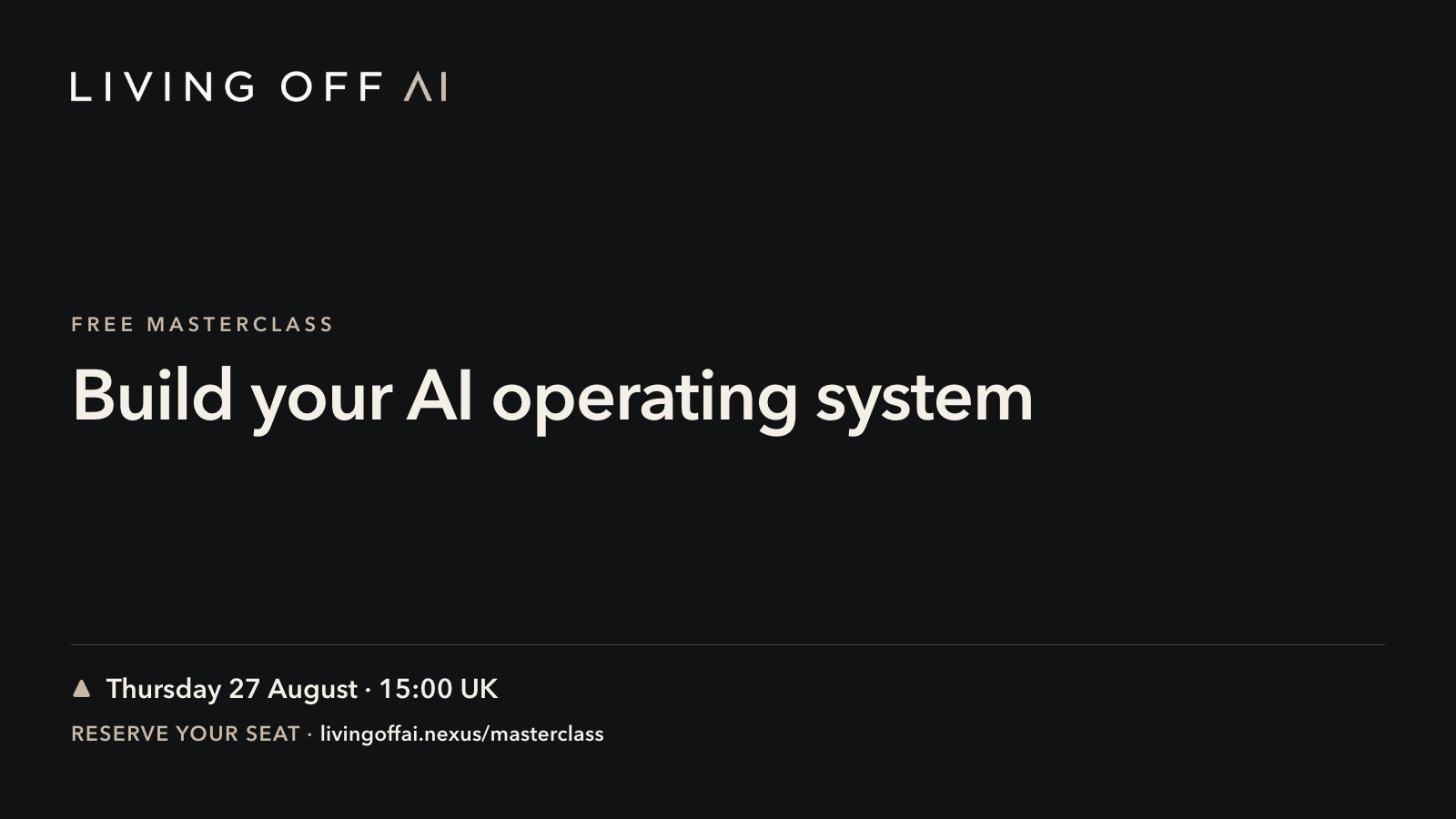
On Thursday 27 August I am running a free live masterclass, Build your AI operating system, at 15:00 UK, 16:00 CET and 10:00 NY. Sixty minutes, live, with the system open on screen. It is the same method Egils Boitmanis and I have implemented with businesses across the United States, the United Kingdom, Switzerland, Italy and Latvia, and it is the way into the next international cohort, which the two of us lead together.
Related posts
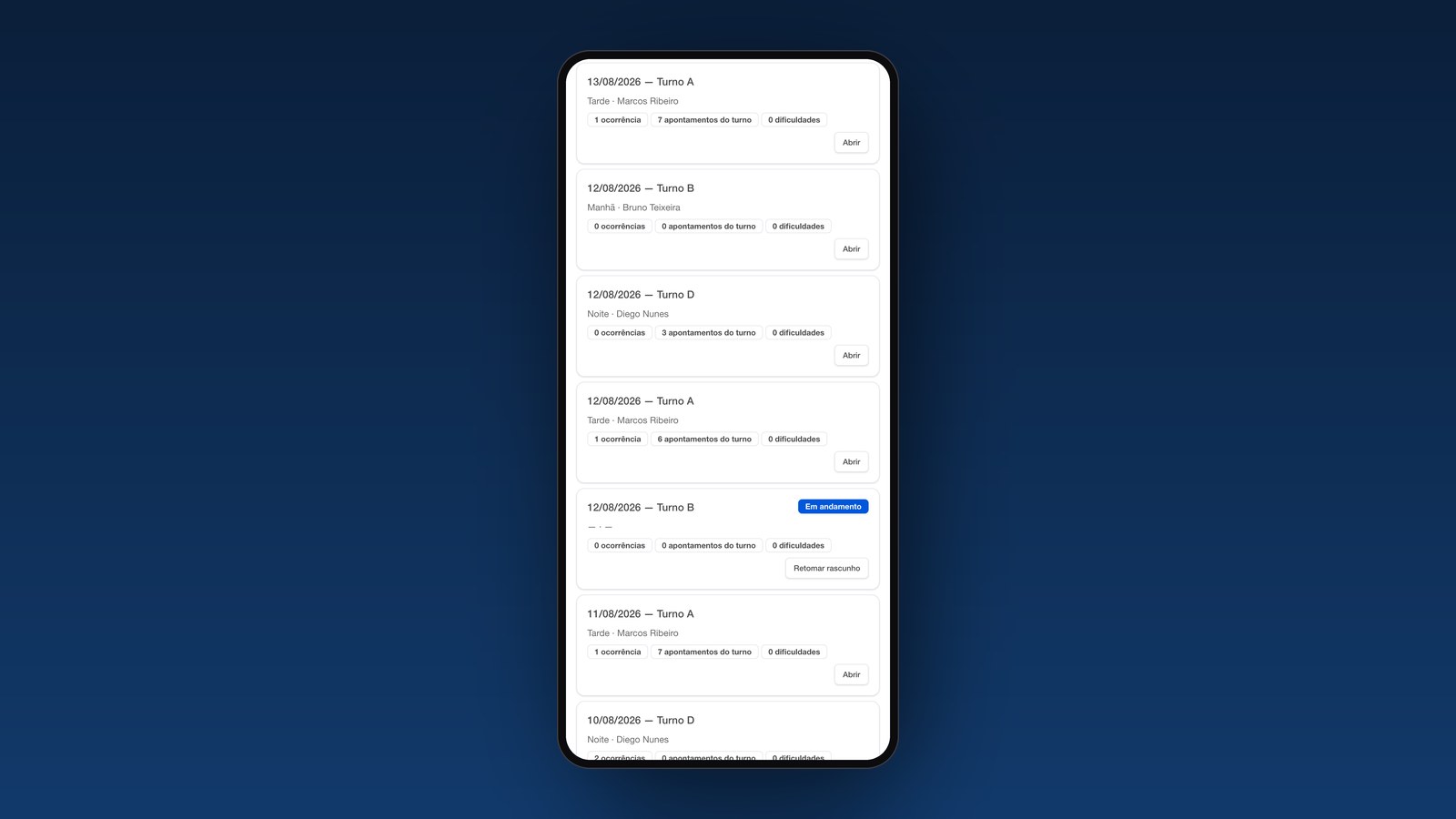
From a long-held idea to a working system in one week: Höganäs' Digital Maintenance Logbook
How Höganäs in Brazil turned a real maintenance need into a working digital proof of concept that people are already using.

I Bought a Robot. Here Is What I Am Actually Going to Do With It.
A 435 euro open-source robot is coming to my desk. Not because I need a robot, but because working from home, I could use the company.

Enterprise AI Agents and Data Security: What Microsoft Scout and the Researcher Agent Actually Change
Microsoft Scout and the Researcher agent bring enterprise AI agents that run inside your identity, GDPR and DLP controls. Here is what changes for business.
Work with us