Hermes Enterprise brings Hermes Agent, the #1 open-source AI agent on OpenRouter, into Microsoft Teams, the Microsoft Store, and isolated sandboxes on Microsoft Azure. Announced on 18 November 2026 during Microsoft Ignite week in San Francisco, the release gives corporate teams a governed way to run an autonomous agent that executes multi-step work across files, browsers, and code, with the option to run it inside the company’s own Azure tenant when data residency or security rules require it.
Most coverage treats this as developer news. In reality, it is an operational shift for directors, COOs, and managers whose companies already run on Microsoft 365 and Azure. This guide covers what Hermes Agent actually does in daily operations, why enterprises stayed away from open-source agents until now, what you can use today and on what terms, and how it compares to Microsoft 365 Copilot. Facts checked on 22 November 2026.
What is Hermes Agent, and why did it matter before Microsoft?
Hermes Agent is an open-source autonomous AI agent created by Nous Research, a portfolio company of M12, Microsoft’s Venture Fund. Over the past year it became the #1 public open agent on OpenRouter’s global ranking, processing nearly 2 trillion tokens a day, and its GitHub repository has passed 260,000 stars.
The reason builders adopted it so fast is simple: a standard chatbot answers prompts, while an agent executes workflows. Instead of stopping at a text reply, Hermes can open and edit files, navigate live web browsers, write and run scripts, connect to messaging channels, and chain multiple steps together until a job is finished.
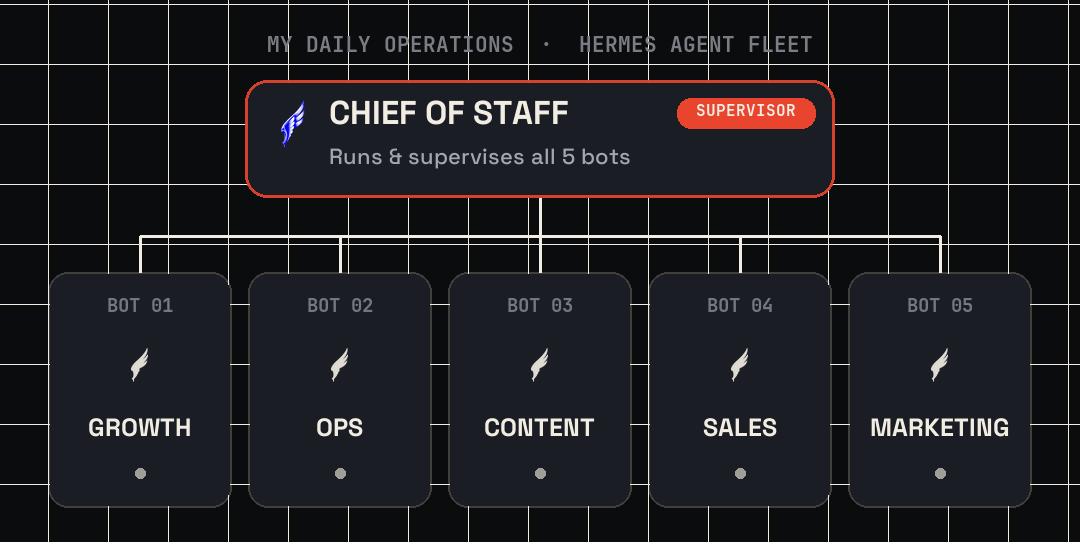
In my own daily operations at Living Off AI, I run five specialized Hermes bots (covering growth, operations, content, sales, and marketing) coordinated by a sixth Chief of Staff bot that supervises the others. It handles real operational work end to end, from research and file preparation to browser workflows. On a personal level, it even found the apartment I am renting today.
Why did companies stay away until now?
Until this month, individual builders and technical founders loved open-source agents, while mid-market and enterprise companies rightly kept them at arm’s length for one reason: security.
Giving an autonomous agent access to local files, a terminal, and a web browser on an unmanaged laptop is a nightmare for IT and compliance. If an agent runs outside corporate identity controls, there is no clean audit trail, no hard boundary around sensitive folders, and no guarantee that one bad command or prompt injection will not expose confidential client data.
For any company subject to GDPR, client confidentiality, or strict internal governance, unmanaged agents were a non-starter.
What changes with Hermes inside the Microsoft ecosystem?
Putting an enterprise version of Hermes inside a company’s existing Microsoft environment solves the governance blocker in two specific ways, alongside a major workflow upgrade for teams.
| Pillar | How it works in Hermes Enterprise | Why it matters for managers |
|---|---|---|
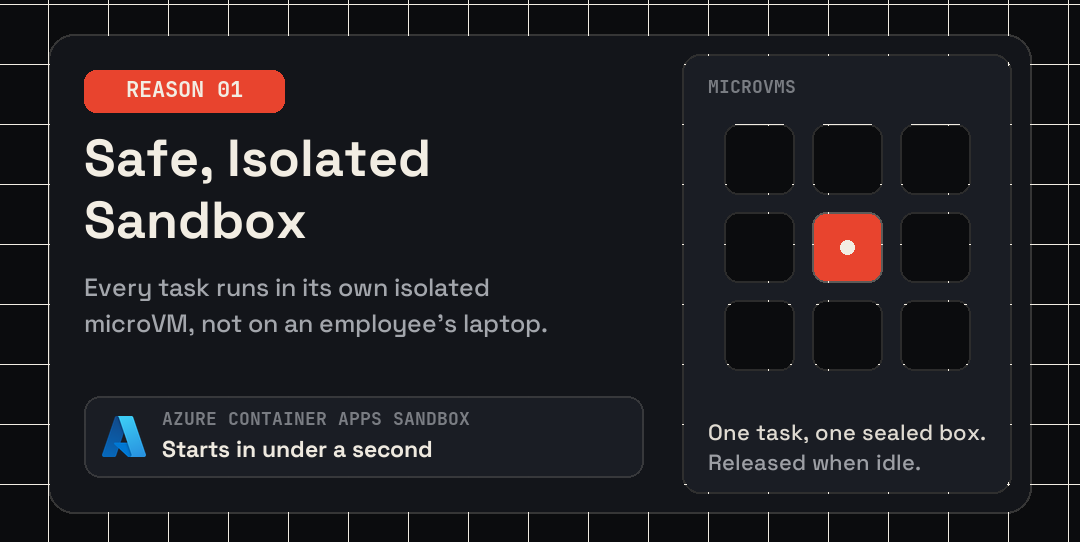
| 1. Isolated sandbox execution | Agent tasks run on Microsoft Azure Container Apps Sandboxes, inside isolated microVMs that start in under a second and release compute when idle. Companies with strict data residency, security or procurement requirements can run Hermes Enterprise in their own Azure tenant. | Every task executes inside its own isolated box instead of on an employee’s laptop, and the strictest companies can keep it inside the cloud boundary their IT team already controls. |
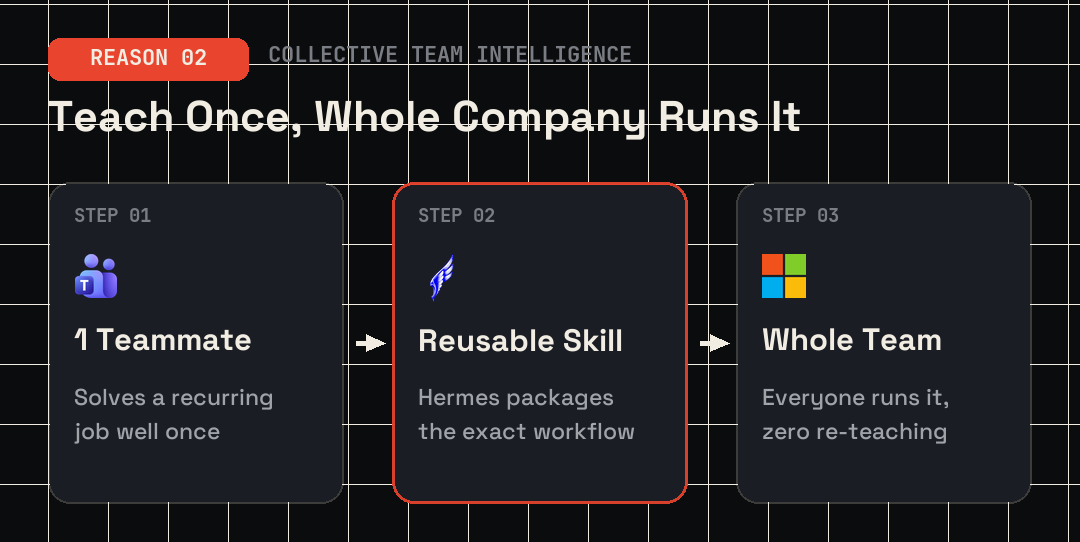
| 2. Reusable team skills (Collective Wisdom) | When an employee delegates recurring work and gets it right, Hermes turns that successful workflow into a reusable skill: a written definition paired with deterministic code for stable steps. | What one person teaches the agent well becomes an instant asset the entire team can run without re-teaching it, using less inference and making outputs more consistent over time. |
| 3. Native Microsoft surfaces | Employees interact with Hermes through Hermes Desktop for Windows or directly inside Microsoft Teams conversations. | Teams do not have to learn a developer terminal or leave the Microsoft tools they already keep open all day. |
Of these, the second point is the real operational multiplier. Most AI tools help one employee finish one task in isolation; the tacit judgment of how your company prepares a financial pack, triages an inbox, or audits a supplier rarely leaves that person’s chat history. Turning a proven workflow into a shared, deterministic skill means process improvements compound across the whole department.
What can you use today, and on what terms?
Announcements around major conferences often blur what you can download this afternoon with what needs a sales conversation. As of 22 November 2026, here is where each piece stands:
- Hermes Desktop for Windows: available now in the Microsoft Store.
- Open-source Hermes Agent: available now under the MIT licence for teams deploying on their own Linux, macOS, Windows, or private cloud infrastructure.
- Hermes Business (self-serve): any team can sign up today at portal.nousresearch.com/business. It gives every member a hosted agent, a shared team library of skills (Collective Wisdom), and one central balance with per-member spend caps. Data lives in an isolated tenant per team on Nous Research’s own infrastructure.
- Hermes Enterprise (through sales): adds dedicated capacity, SSO and support with SLAs. Organisations with strict data residency, security or procurement requirements can run it in their own Azure tenant; Nous Research lists on-premise and private cloud deployments for organisations of more than 500 people.
- Microsoft Teams: announced on 18 November and presented at Microsoft Ignite session BRK448 (“Run secure agent loops in production with isolated sandboxes at scale”). The Business page does not yet list Teams among its integrations (Discord, Telegram, Slack and WhatsApp), so confirm availability for your tenant with Nous Research before you plan around it.
How does Hermes Enterprise compare to Microsoft 365 Copilot?
A common question from leadership teams is why Microsoft would back Hermes through M12 and feature it on stage at Ignite when Microsoft already sells Microsoft 365 Copilot and its newer Frontier agent offerings. They solve different layers of work.
| Dimension | Microsoft 365 Copilot | Hermes Enterprise on Microsoft |
|---|---|---|
| Primary design | Assistant embedded inside Word, Excel, Outlook, PowerPoint, and Teams meetings | Autonomous execution agent running multi-step loops in an isolated cloud sandbox |
| Model choice | Managed by Microsoft’s Copilot stack | Model-agnostic: bring Frontier models via Azure AI Foundry, OpenRouter, or open-weight models |
| Execution environment | Grounded in Microsoft Graph documents and apps | Isolated microVM sandbox per workload on Azure Container Apps (shell, files, code execution, web workflows), optionally in your own Azure tenant |
| Process memory | Prompt libraries and Studio configurations | Automatic skill extraction (Collective Wisdom) pairing written instructions with repeatable code |
| Code openness | Proprietary SaaS | Built on the open-source Hermes Agent core |
In short: Copilot is built to help every employee draft, summarise, and search inside Office apps. Hermes Enterprise is built for multi-step operational work where an agent needs its own isolated workspace to open files, run code, navigate tools, and package repeatable workflows for the rest of the team.
What should directors and managers do next?
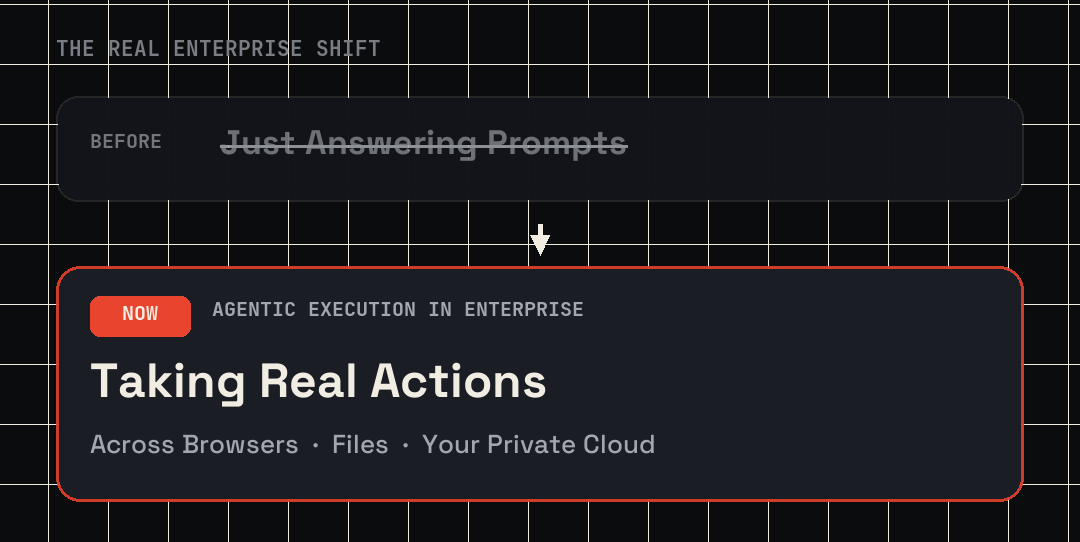
The bigger takeaway has little to do with any single brand name. AI in the enterprise just crossed a clear threshold: moving from answering prompts to taking real, governed actions across browsers, files, and private cloud infrastructure.
Three practical steps for leadership teams evaluating agent workflows over the next quarter:
- Audit recurring multi-step work, not isolated prompts. Look at workflows where your team repeatedly pulls data from two or three places, checks rules, formats a deliverable, and hands it off. Those are agent workflows, not chat prompts.
- Insist on tenant-level isolation and model freedom. Whether you deploy Hermes on Azure, an on-premise European sovereign box, or another agent stack, keep execution inside your own cloud or hardware boundary and avoid locking company processes to a single model vendor.
- Capture workflows as shared skills. Stop letting every manager prompt from scratch in private tabs. Standardise what works so your tenth employee gets the same result as your best operator.
FAQ
Is Hermes Enterprise available to every Microsoft 365 customer today?
Not automatically. Hermes Desktop for Windows is live in the Microsoft Store today, the core open-source Hermes Agent is free to self-host, and any team can sign up for the self-serve Hermes Business plan, which includes the Collective Wisdom team-skill library. Running Hermes in your own Azure tenant is part of Hermes Enterprise, which you arrange with Nous Research directly. Check Microsoft Teams availability for your organisation with them before you plan around it.
Does company data leave our Microsoft environment?
It depends on the plan. On the self-serve Business plan, data lives in an isolated tenant per team on Nous Research’s own infrastructure, not in your Microsoft environment. With Hermes Enterprise, organisations with strict data residency, security or procurement requirements can run it in their own Azure tenant, where agent workloads run in isolated Azure Container Apps microVM sandboxes. Your data exposure also depends on which model endpoint you configure; using models hosted within your Azure tenant keeps inference inside that boundary.
Do employees need coding skills to use Hermes in Microsoft Teams?
No. In the Teams integration, employees assign knowledge work (such as financial analysis, document drafting, or inbox triage) in plain language inside a Teams conversation and review the finished output in the same thread.
Does Hermes Enterprise replace Microsoft 365 Copilot?
Not necessarily. Many Microsoft-centric organisations will keep Copilot for quick in-document drafting and meeting summaries, while using sandboxed agents like Hermes for deeper, multi-step operational workflows and reusable team skills.
If you want to map which recurring workflows in your company are ready for governed AI agents, or deploy private agent infrastructure on your own cloud or hardware, get in touch or see how we work.
Sources
- Nous Research: Nous Research partners with Microsoft to bring Hermes Agent to the enterprise (18 November 2026)
- Nous Research: Hermes for your Business (plans, data location and integrations)
- Hermes Agent Official Documentation & Platform Overview
- Microsoft Ignite 2026 Session Catalog (BRK448: Isolated Sandboxes at Scale) (17-20 November 2026)
- Hermes Agent Open-Source Repository (MIT Licence)